
5/26/2023 Friday
Wasn’t feeling it last night; not feeling it this morning. I walked three miles of rocky, rugged nonsense and had a series of epiphanies. Some ideas that’ve been stewing came together. The relationship between the Appalachian Trail Conservancy (ATC) and thru hikers isn’t good. The pandemic brought it to new lows. I think I know why and how we might go about fixing it.
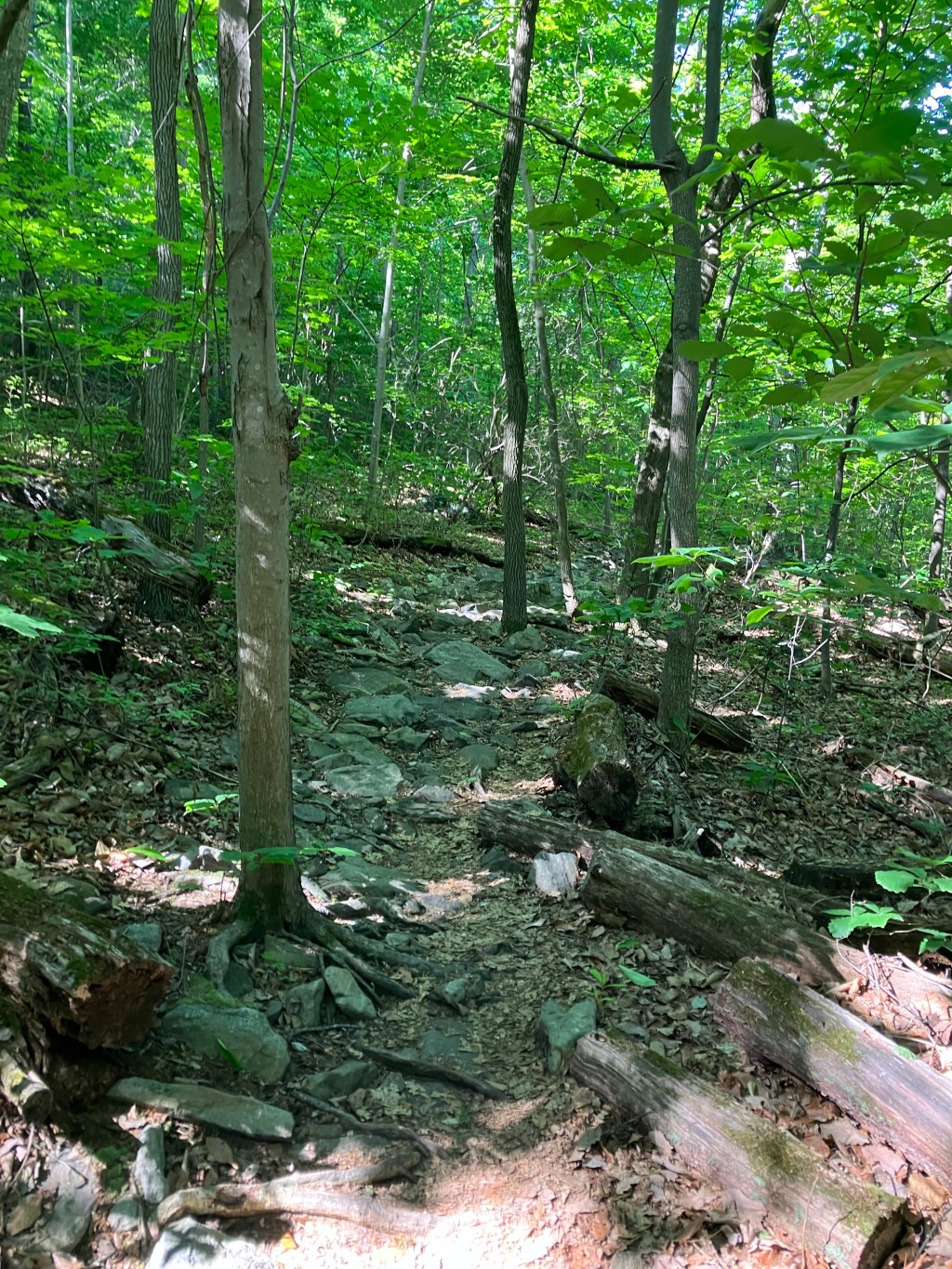
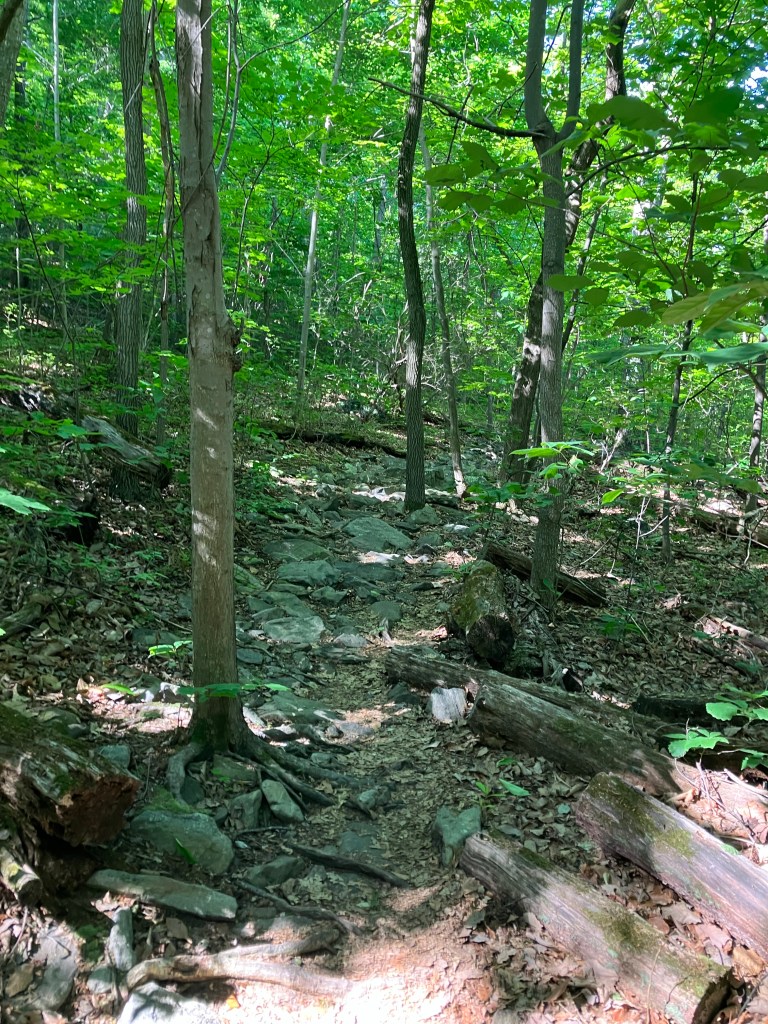
But first I must tell you that the rollercoaster segment is misnamed. The ups and downs are trivial—I didn’t see any that exceeded 500 feet. It’s the rocky tread that makes it miserable. There are already things named for being rocky on trail (see Rocksylvania) so I’m not sure what you’d call it, other than a pain.
At the beginning of the rollercoaster there was a sign, sort of a cute sign, to let you know about it (see below). It reads “Hiker warning. Entering the rollercoaster. Have a great ride. -Trailboss and Crew”
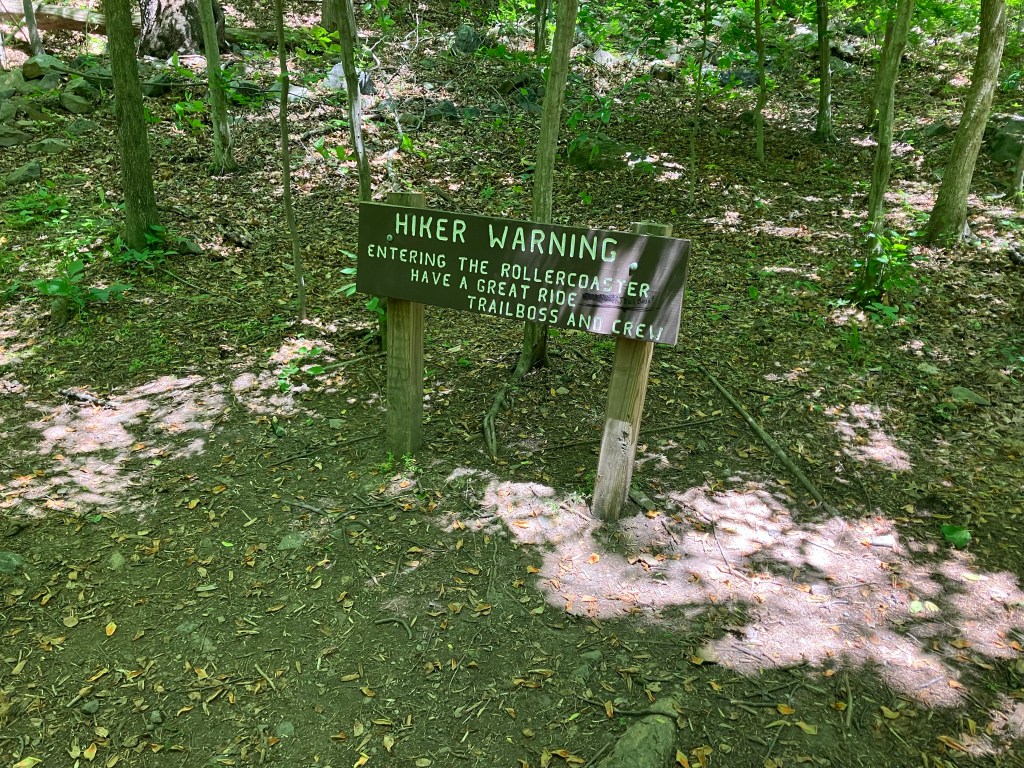
At some point someone graffitied “Fuck you ‘Trail Boss’” on the sign. The profanity has been blacked out with a marker. Now, why would someone write that? I was theorizing for a while that it has to do with a certain kind of macho (the kind where you joke about pain—maybe even egg each other on with suffering and get through hard times that way). It’s the kind of thing you’d see in boot camp type settings. The part of the sign for the roller coaster that says “have a great ride,” when interpreted from this angle, might be seen as someone saying, “we made this section really difficult to torture you and now we are joking about that.” If I thought that’s what it said, I’d want to tell someone to fuck off too.
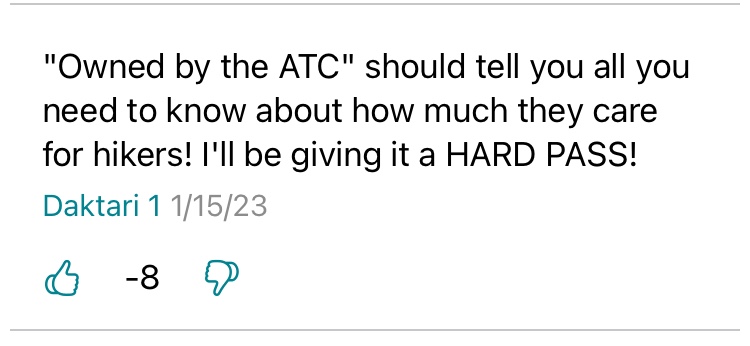
That’s what got me thinking about the language of the trail again. I see these kinds of comments on the app all the time. Here’s one about the hostel I’m staying in, which is managed by the PATC (the Potomac Appalachian Trail Club), but the app says it is owned by the ATC.
Consider another sign I saw, but didn’t photograph, in the Smokies in 2021. It was an official request to report Covid outbreaks on trail. Someone had scrawled “why would we help you?!” (meaning the ATC) on it. There is lots of stuff like that on trail; I only recently started recording examples.
Seeing the rollercoaster sign and the graffiti and other comments got me thinking. I want to be part of the solution. I have been so unhappy with the ATC’s official communications, but I don’t want to dislike them. And there are other, wider issues related to how we frame outdoor recreation that have been bothering me for a while.
Here are some ideas for things we could do, if we decided they were worthwhile. Given time, these could be elaborated with concrete examples and made useful to people in different roles. It’s a rough draft, folks.
1. Fundamentally break the human/nature dichotomy and the purism at the heart of Leave No Trace. When I was trained as an LNT educator in Colorado (I worked with the Poudre Wilderness Volunteers) the person running the training session had been a wilderness ranger in the 1970s. Between then and becoming a writing teacher she had developed some fascinating ideas about and challenges to LNT. She taught us that of course we leave a trace. We always leave a trace! We are animals. She didn’t want the volunteer rangers to be “cops in the woods” and ruin people’s ability to de-stress out there. She persuaded me that one weakness of LNT is that its purism makes humans into interlopers. But we evolved in nature. We belong in nature. We have the right to feel a part of it. We could shift to Leave Less Trace or Minimize Your Trace and set down principles (rather than rules) for decision making which empower people to interpret LNT to fit their circumstances. This doesn’t meant any more impact; it’s just a different way of talking about reducing impact that doesn’t set an impossible, unattainable goal.
2. Recognize that access to wilderness is a human right. It’s a right that far, far too few people can enjoy but that doesn’t make it a privilege. (For more on this distinction, see my book, Arguing Identity and Human Rights, out in September 2023 from Routledge). Yes, there are safety concerns and other conditions that may close a trail, like a pandemic, but that doesn’t mean we can shame people for clinging to the “privilege” of their “selfish” desire to hike whatever distance it is they need to hike—this happened big time during the pandemic, and I blame the ATC for setting the tone. We are stewards, not gatekeepers. We who volunteer and build/maintain trails are creating opportunities for access, not providing a privilege which we then become charged with allowing or revoking based on our appraisal of others’ moral worthiness. This point would require more context and examples to make fully.
3. Challenge the enmity between long distance hikers and trail orgs. The ATC may be unique in this regard. I’ve never seen any other trail organization with such a bad rep among hikers. The Colorado Trail Foundation was a friend and ally in my quest to hike the CT; I looked to them for guidance on how to stay safe. I followed their rules and felt no resentment because they talked to me with respect. When AT thru-hikers complain, people point out that we are only .5% of the people using the trail (or something like that). Yes, but we’re on it for six months and 2000 miles. In terms of miles and time spent on trail, we are a large constituency. That doesn’t mean that thru hikers deserve some kind of special consideration; it means that we are out there, with the hiking public, who often look up to us. Think how powerful we could be as allies in the ATC’s efforts to persuade the public to help preserve the trail. I’ve talked to so many day and section hikers in the past three months! Certainly as many as I would’ve in a season volunteering for PWV.
4. Accept that trails are not wilderness preserves. They are narrow corridors which we “sacrifice” to provide humans the ability to get into nature without owning a landed estate (BTW, free, constant access to nature without LNT has been the norm for all but a tiny fraction of human history—we were [are?] hunter-gatherers. I am happy to be alive now, in modern times, but I do wish we could acknowledge that that is a loss). So it’s often not pristine or even particularly wild. There’re too many people, too much garbage, too much impact. The main reason we preserve trails is so they can be used by other humans in the present and future. I’ve often seen people and texts miss the opportunity to make a prosocial argument (help other humans to enjoy nature) in favor of a purist message (save the environment!). This is more an issue of emphasis. I wish I had the time to do a full data analysis with examples.
5. Take a structural view of common trail problems. For example: bears are getting food on the AT, becoming habituated, and then having to be killed for human safety. By all means provide signage and instruction, but could we stop implying that it’s individual moral failures creating the problem? Conflict happens when humans encroach—it’s entirely predictable. So let’s solve it structurally by putting bear boxes or poles at every shelter from Springer to Katahdin. I would donate to that! Heck, I would raise money for that.
6. Lean on positive messages. The bear example works here too. I’m gonna guess that it only takes 1% noncompliance to create a problem. So quit shaming the other 99% by shouting at us from signs. I am fastidious about bear/food safety in the backcountry. I don’t hang; hanging doesn’t work. I use a resistant container instead, which is heavier. But I can’t remember the last time I saw a sign that said, “hey, if you’re doing X, then you’re saving the life of a bear”
7. Abandon authority as a primary appeal. In Colorado, I trained in a public-facing communication technique called “Authority of the Resource.” It’s supposed to be an alternative way to enforce rules without making it look like that’s what you’re doing. I never liked it. People see through it immediately. They see you as a cop in the woods. I think ridge-runners on the AT sometimes have this problem. The problem isn’t the nature of the authority (human rules vs. nature); it’s the idea of authority at all. No one is watching in the woods! And we don’t want people to feel watched. We don’t want the panopticon to extend into the woods (or further in than it does already). We have to persuade people to choose to do the right thing instead. There are a whole host of techniques to do that. If I had the time, I could build a system to teach it, maybe several different techniques that people could choose from to suit their own styles.
A seven part plan?! Now you know why I only got three miles today! Ideas come when they come and I needed a rest anyway. I’m gonna do a 20 into Harpers Ferry tomorrow. I booked a room. Oh, gosh, I’ve just realized it’s Memorial Day Weekend. Should be an interesting few days on trail.
Wish I could have had these epiphanies when I was in Damascus—it would have been a pitch perfect conversion narrative. As long as we are talking about the biblical story of Paul’s conversion, though, I have a profound insight: Saul is a way cuter name for a guy than Paul.


 Project Eveningland
Leave a reply to Jamie McCune Cancel reply